Marriage vows and marital fidelity
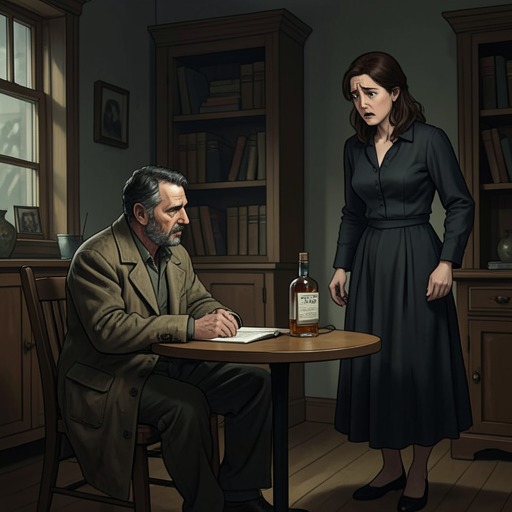
The Tenant of Wildfell HallMarriage vows and marital fidelity function in the novel as moral obligations whose meaning is tested by conduct, not merely by the words spoken at a wedding. Helen’s confrontation with Arthur Huntingdon makes that test explicit: he calls his pursuit of Annabella Lowborough insignificant, yet admits he would regard the same behavior toward his own wife as grounds for lethal retaliation. Helen uses the contradiction to challenge both his betrayal of his friend Lord Lowborough and his claim that marital authority entitles him to her unquestioning obedience.
The Principle of Fidelity
The dispute turns on reciprocity. Helen asks Arthur to imagine Lord Lowborough acting toward her as Arthur has acted toward Annabella. Arthur answers that he would kill such a man. Helen then points out that this response gives the lie to his description of his own behavior as nothing: he recognizes the injury when he imagines himself as the aggrieved husband, but dismisses it when he is the person who has betrayed a friend and pursued another man’s wife.
For Helen, fidelity concerns more than the private bond between spouses. Arthur has trifled with both her feelings and Lord Lowborough’s, and has tried to take from his friend what the friend values more than material wealth. Her argument makes the vows a measure of ethical consistency: a person cannot treat their force as serious when demanding fidelity from others and as a jest when breaking them. She asks whether she can love a man who behaves in this way and calmly insists that it is nothing.
Vows and Marital Authority
Arthur responds by turning the language of marriage against Helen. He charges that she is the one breaking her vows because she promised to honor and obey him, and presents her accusations as an attempt to command him. He declares that he will not be dictated to by a woman, even his wife. His reply shifts the issue from his conduct toward Annabella to Helen’s supposed duty of submission, revealing how he interprets the marriage vows asymmetrically: her obligations are binding, while his fidelity is treated as optional.
Helen does not accept that reversal. She asks whether Arthur intends to continue until she hates him and then accuse her of breaking her vows. Her question identifies the consequence of treating obedience as a substitute for mutual regard: the husband’s betrayal damages the very attachment whose preservation he demands from his wife. In the exchange, his insistence on authority cannot answer her ethical challenge; it instead exposes the conflict between marital fidelity as a reciprocal commitment and marriage as a claim to control.
From Betrayal to Estrangement
Arthur’s assurance that he loves Helen more than the women he had previously pursued does not repair the breach. He says she need not fear being forsaken as they were, but the promise offers preference rather than fidelity: it asks Helen to take comfort in being favored without addressing the conduct that has made the comparison necessary. Her response is that, had she known these things before, she would never have given him her love. The disclosure changes how she understands the marriage and the man she chose.
The conflict culminates in a declaration that they remain husband and wife in name only. When Helen asks to leave with their child and what remains of her fortune, Arthur refuses; he also refuses to let her have the child without the money, or herself without the child. His answer makes the practical force of the marital bond plain: fidelity has failed, but the marriage still constrains Helen’s choices. She says she must therefore stay, hated and despised, while defining the relationship as nominal rather than loving.
The Rule’s Wider Stakes
The novel connects marital duty to the care and protection of children. Helen regards leaving as necessary because her son must be delivered from his father’s corrupting influence, yet her request to take the child and her remaining fortune is denied. She later resolves not to reveal her place of refuge even to her uncle and a trusted woman, so that they can truthfully deny knowing where she is. The separation is thus presented not as a simple escape from a failed relationship, but as a difficult effort to protect her child while living under the consequences of marriage.
The narrative also resists making Helen’s future dependent on Arthur’s death. When Gilbert Markham says he will wait until Arthur has run through his career and then hopes Helen will marry him, she rejects the prospect of building their happiness on another person’s death. She also points to the uncertainty of waiting years for a husband whose habits might allow him to live to old age. Only after Arthur’s death does the possibility of Helen and Gilbert’s marriage become real; before that, the novel distinguishes emotional attachment from a freely available remarriage.
Marital fidelity is therefore not reduced to a rule that a wife must remain silent or endure betrayal. The confrontation exposes the unequal enforcement of vows, while Helen’s later separation shows the tension between a lasting marriage bond and the duty she believes she owes her child. By tracing the material and emotional consequences of that tension, the novel treats fidelity as a reciprocal moral responsibility, not a privilege reserved for the husband or a demand imposed only on the wife.